- US "firmly opposed" to IMO Net-Zero Framework, FMC Chairman tells IBIA Convention
- FMC analysis puts annual cost to Shipping at $53-265 billion
- Calls for technology-neutral rules covering LNG, bio-LNG, and all biofuels
- No carbon tax, no IMO fund, one target reviewed by 2035
- US backs further talks, with legal text hoped for in early 2027
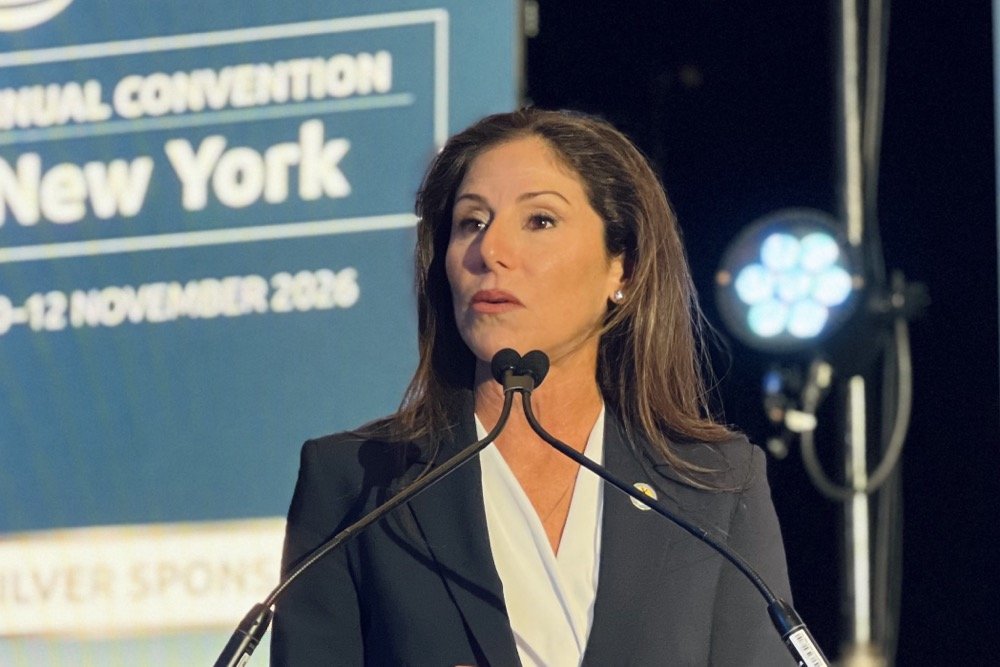
The United States remains firmly opposed to the IMO Net-Zero Framework (NZF), Federal Maritime Commission (FMC) Chairman Laura DiBella told the IBIA Annual Convention in New York on Wednesday.
"Our message is clear: the NZF cannot be adopted, will never be enforced, and needs to remain off the table," she said.
"This initiative raises more questions than answers, and it must be rethought before international acceptance and implementation."
DiBella said the FMC's own analysis estimates the framework, if implemented globally as proposed, could cost Shipping between $53 billion and $265 billion a year, with the costs passed on to businesses and consumers.
She described the NZF as the agency's biggest area of focus because of its impact on US cargo, which the FMC regulates.
The primary flaw, in her view, is that the framework tries to move Shipping away from the global petroleum system by regulation rather than by ordinary market forces.
"Fuel diversity does not necessarily equate to fuel availability, stability, and reliability," she said.
Four Conditions
DiBella set out four conditions for any alternative, which she said the US has been pursuing with a growing coalition of IMO members.
First, any framework must be commercially realistic and technology neutral, accommodating existing and emerging technologies "including LNG and bio-LNG, and all biofuels".
Second, it should have a single, transparent emissions intensity target rather than the NZF's two-tier structure, with targets reviewed no later than 2035 based on the availability and affordability of compliant fuels.
Third, compliance must be voluntary, flexible, and market-based, with no mandatory payments or de facto global carbon tax.
Fourth, the US will not accept a centralised IMO-administered fund to collect and redistribute revenues.
Next Steps
Despite the opposition to the NZF in its current form, DiBella said the US believes there is a constructive path forward.
"We understand that industry wants it and needs it, so we want to see this happen," she said.
But she warned that significant technical and policy questions remain unresolved, and that rushing to decide on a new framework next month risks undermining the prospects for a lasting consensus.
As a result, the US supports the upcoming work at the Marine Environment Protection Committee (MEPC) in November and December and hopes to see legal text considered in early 2027, she said.
The IMO's intersessional working group on GHG emissions meets from November 23-27, followed by MEPC 85 from November 30 to December 3.
The extraordinary session that adjourned in October 2025 without adopting the NZF is due to resume on December 4, subject to discussions at that meeting.