On 27 October 2026 the Office of Trade Sanctions Implementation published guidance on complying with UK trade sanctions relating to specified ships. It is a short document and it does not change the law. Its value lies in confirming, in one place, how OTSI reads the service prohibitions that now attach to individually listed vessels under the Russia, Iran and North Korea regimes, who it expects to comply, and what it expects them to do when something goes wrong.
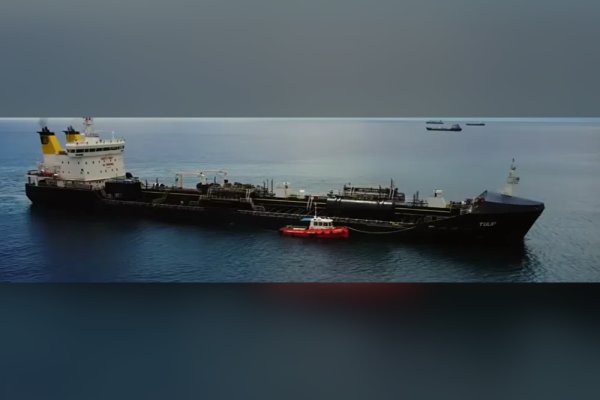
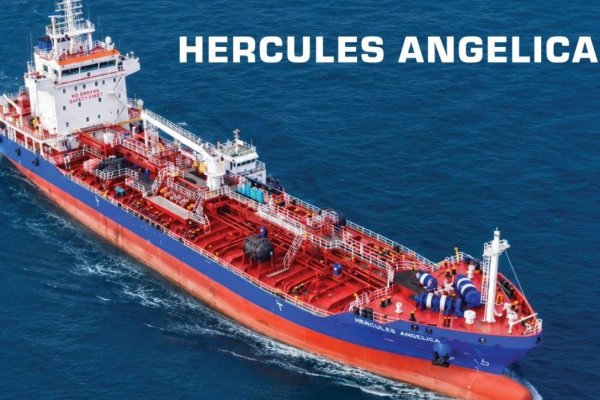
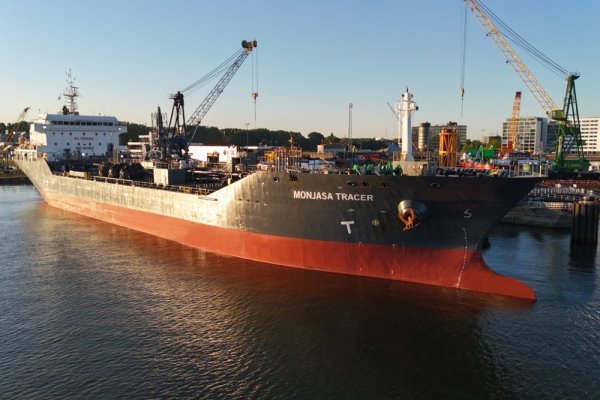
The context is the shadow fleet. By the FCDO's own count the UK had specified more than 600 tankers by 8 October 2026, and the 1 October package reached beyond the tankers themselves to two vessels said to be providing them with bunkering services. The listed population is now large enough, and growing fast enough, that a bunker supplier or trader with any UK nexus will encounter it. However, with so much attention being given to Russia, it is easy to forget the rules relating to certain other jurisdictions as well. The guidance is a salutary reminder that the rules relating to jurisdictions such as DPRK and Iran are just as important.
A specified ship does not run itself. Somebody brokers its fixtures, charters it, crews it, classes and maintains it, insures and finances it, agents it in port, lifts its cargo and sells it fuel. The regulations do not use the industry's vocabulary for those activities. They work instead through a short list of defined categories: brokering services, chartering services, crew services, operating services, technical assistance, financial services or funds, and services relating to the acquisition, sale, transfer or supply of the ship. Bunkering appears by name only in the North Korea regime. Most readers of this publication will recognise the kind of service they provide somewhere in that list. The exercise the guidance invites is to work out which category it falls under.
The legal architecture is recent. For Russia, the Russia (Sanctions) (EU Exit) (Amendment) Regulations 2026 came into force on 20 May 2026 and inserted new regulations 46AA and 46AB into the 2019 Regulations. For Iran, equivalent provisions arrived with the Iran (Sanctions) (Amendment) Regulations 2026 on 29 September 2026. The North Korea regime has long contained a narrower prohibition on bunkering, ship supply and classification services.
The core prohibition is in two limbs. First, a UK person must not directly or indirectly provide, in relation to a specified ship, technical assistance, crew services, operating services, chartering services, brokering services, or financial services or funds, together with services relating to the acquisition, sale, transfer or supply of the ship. OTSI glosses each category. Brokering includes arranging deals relating to the ship, including recycling. Chartering includes charter party negotiation. Operating services include demurrage and the fulfilment of charter clauses. Technical assistance includes maintenance, retrofitting and classification. Financial services include insurance, reinsurance and banking. Transfer includes a temporary transfer of possession, so a bareboat arrangement is within scope.
Second, and less widely noticed, a UK person must not procure services from a specified ship, including services related to its use. OTSI gives the obvious example: procuring transport services for cargo from a specified ship. That limb reaches charterers, traders and cargo interests who have no ownership or management connection to the vessel at all. A UK trading house that fixes a listed tanker to carry a cargo is caught on the procurement side even if every service to the ship is supplied from outside the UK.
The omission of bunkering from the Russia and Iran lists deserves a closer look. Neither list contains the words bunkering or ship supply. That is not the end of the analysis. The physical supply of fuel to a listed vessel sits uncomfortably close to several of the listed categories, and a supply on credit terms raises a separate question about the provision of funds. Specified ships are also, in many cases, owned or operated by persons who are themselves designated, which brings the asset freeze and the prohibition on making economic resources available into play on an entirely separate footing. The guidance does not resolve how a bunker stem to a Russia-listed vessel should be characterised under regulation 46AA. Anyone supplying, brokering or financing bunkers to vessels in the shadow fleet should treat that as an open question requiring specific advice rather than a gap they can rely on.
The contrast with the EU position is instructive, and for groups with operations in both jurisdictions it is where the compliance gap will open. Article 3s of Regulation 833/2014, introduced in the 14th package and extended since, deals with the listed vessels in Annex XLII in a single provision. It bans port, anchorage and lock access, and it prohibits a list of services that is written in the industry's own language: bunkering, ship supply, crew changes, cargo loading and discharge, fendering and tug services, ship-to-ship transfers, and the procurement of any services from the vessel, alongside the familiar financing, insurance, brokering, technical assistance and flag registration categories. The 21st package added vessels that bunker or tow listed vessels to the criteria for listing. Annex XLII now runs to more than 650 vessels, and it has direct effect in Ireland. An EU bunker supplier therefore knows exactly where it stands with a listed vessel. Its UK counterpart, or the UK arm of the same group, has to reason from operating services, technical assistance and funds to reach a conclusion the EU text states in a word. The two lists also do not match, so a vessel can be listed in one jurisdiction and not the other, and a group screening against a merged dataset needs to know which regime produced the hit.
Three features of the guidance deserve particular attention from compliance teams.
The first is that the new prohibitions are not retrospective. They do not automatically apply to ships that were already specified before 20 May 2026 (Russia) or 29 September 2026 (Iran). The government may review existing specifications and extend the new measures to them, and recent FCDO sanctions notices show vessels being specified for the full suite of shipping and trade measures, with the applicable regulations listed in the Other Information field of each entry on the UK Sanctions List. The practical consequence is that a screening hit reading simply specified ship is not enough. The compliance question is which regulations the ship has been specified for, and that requires reading the entry rather than the alert.
The second is the scope of who must comply. The guidance applies to anyone undertaking activity anywhere in the UK, including the territorial sea, and to UK nationals and UK-incorporated companies wherever they are. A UK-registered broker arranging a fixture in Dubai, or the UK subsidiary of a non-UK bunker group, is within scope. The nationality of the vessel, the location of the stem and the governing law of the contract do not alter that.
The third is enforcement. OTSI is responsible for the implementation and civil enforcement of both the provision and the procurement limbs, and it can refer cases to HMRC for criminal investigation. Under the Trade, Aircraft and Shipping Sanctions (Civil Enforcement) Regulations 2024, OTSI can impose civil monetary penalties on a strict liability basis, up to the greater of £1 million or 50 per cent of the estimated value of the breach, with a discretionary reduction of up to 50 per cent for timely voluntary disclosure. The shipping sanctions proper, including the prohibition on chartering or operating a specified ship under regulation 57ZA and the port entry and detention powers, fall to the Department for Transport under the same 2024 Regulations. A single transaction can therefore attract the attention of two enforcement bodies.
The exceptions are narrow and procedural. Under the Russia and Iran regimes, a UK person may act where urgently necessary to prevent or mitigate an event with a serious and significant impact on human health or safety, infrastructure or the environment, or where necessary to protect the safety of a ship or the life of any person. Anyone relying on either exception must notify the Department for Business and Trade within five days through OTSI's online contact form. The North Korea regime permits continued bunkering or ship supply only where refusal would endanger the lives of those on board, and prescribes no equivalent notification. A master requesting fuel to reach a port of refuge is a scenario the industry knows well. The guidance confirms that the humanitarian answer is available, but it has to be made out on the facts and, as a matter of prudence, recorded at the time.
On reporting, the guidance repeats that anyone who suspects a breach of OTSI-enforced trade sanctions should report it through the Report a Breach tool, and that relevant persons in the legal and financial sectors are under a legal duty to do so. A club, bank or lender that identifies a specified ship after the event therefore has a reporting decision to make as well as a performance decision.
The guidance closes with the recommendation that businesses seek independent legal advice where their obligations are unclear. That is an unusually candid acknowledgment from a regulator that the categories it has just described are not self-applying. For bunker suppliers, traders and owners, the immediate work is to check how screening systems present the UK Sanctions List, to confirm that contracts of supply and charter parties address the procurement limb as well as the provision limb, and to decide in advance who will take the decision, and on what evidence, when a vessel on the list asks for fuel.
Paul Henty is a partner at Beale & Company Solicitors LLP, London and Dublin. He advises suppliers, traders and owners on sanctions compliance, contractual sanctions protections and challenges to EU designations.