Crude prices experienced a second consecutive round of gains on Wednesday, this time rising almost 2 percent after Iran-backed Houthis said they attacked Saudi Arabia's Ras Tanura oil refinery and Riyadh's financial district.
After satellite images showed the refinery catching fire and a Saudi-led coalition destroyed four drones over the area, Brent by 1704 GMT rose $1.80, or 1.9 percent at $93.20 per barrel; West Texas Intermediate climbed 96 cents, or 1.1 percent, to $83.01.
The Houthi attack on the 550,000 barrel per day (bpd) refinery (which forms part of a strategic complex on the kingdom's Gulf coast facing Iran) reportedly amounted to two hits: one at the refinery and one at the export terminal, which is one of Saudi Arabia's main Mideast Gulf crude outlets.
But while crude trading seemed to be influenced once again by a rising geopolitical risk premium, concerns overall about an impending global glut remained intact and were bolstered by data from the Energy Information Administration showing that U.S. crude stocks rose for a third straight week by 1.1 million barrels to 418.9 million barrels, in the week ended November 20.
Gasoline inventories rose by 1.7 million barrels to 217.7 million barrels and were 3 percent above the five-year average, the EIA said.
Zhenqiang Seto, an oil research specialist at LSEG, contributed to the glut conversation on Wednesday by pointing out in advance of the Organization of the Petroleum Exporting Countries’ (OPEC) November 29 meeting that the United Arab Emirates was no longer restricted by OPEC policies, and Iraq was seeking higher oil output capacity.
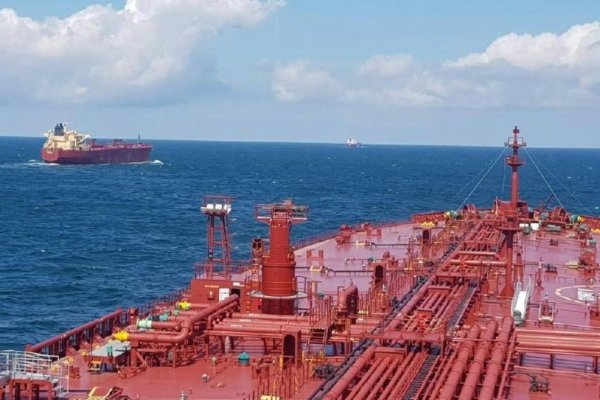
Meanwhile, Iran’s boasts of continued attacks on vessels in the Strait of Hormuz had negligible influence on crude trading patterns; the Islamic republic claimed a fourth tanker was hit by a mine, and Tehran threatened to tighten control over the waterway until its demands to end the war with the U.S. were met.
This prompted Robert Yawger, director of the energy futures division at Mizuho Securities USA, to say, "The reality on the ground is more a 'war but no war' situation, with spasms of violence…look for the supply surplus to become the dominant theme in coming weeks."