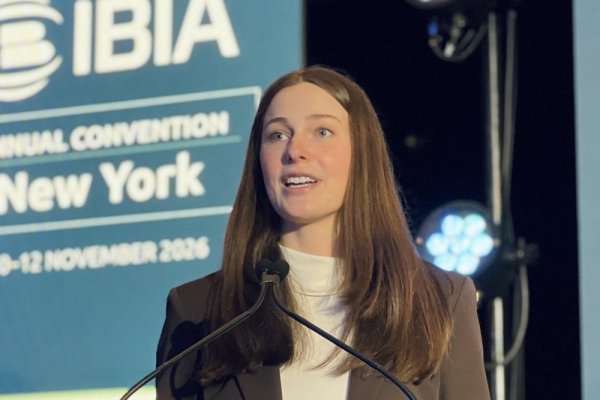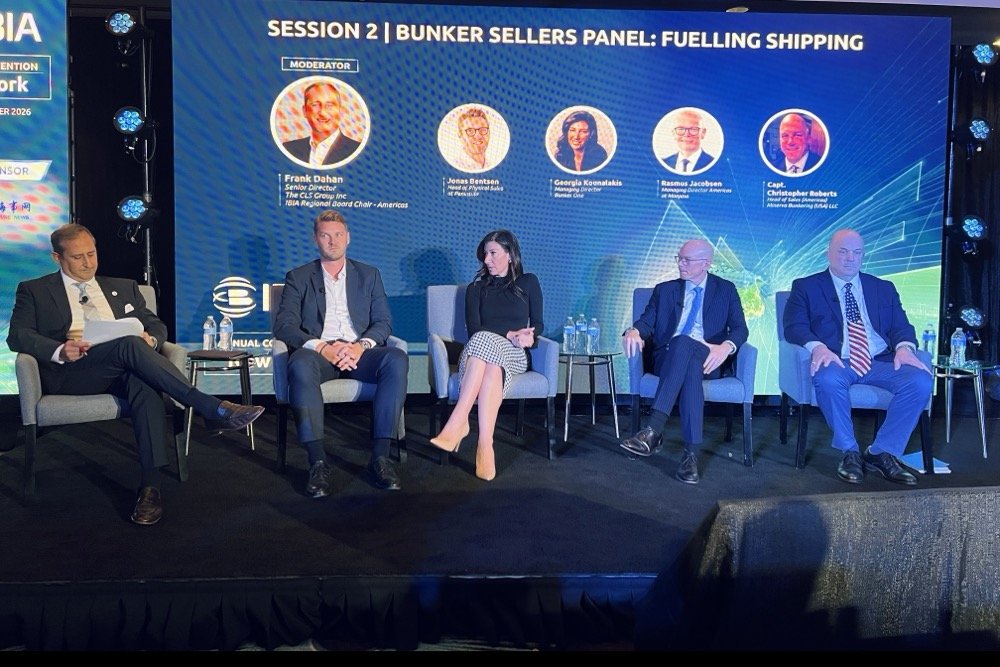
Biofuel bunkering in the Americas "is not happening", with suppliers seeing almost no demand for the product despite investments in making it available for buyers, the bunker sellers panel at the IBIA Annual Convention in New York heard on Wednesday.
"In the Americas, they want the infrastructure, but nobody is lifting it," delegates were told.
"We've had one company in two plus years ask about bio that actually lifted in the Americas."
One point of friction was the cost, with some buyers complaining it was more expensive than in Singapore, which the panel heard was to be expected and it had never been the aim to cost less.
In the current environment, future biofuel supply in the Americas would need the backing of firm contracts, delegates were told.
But few buyers seem ready to sign such contracts, with the panel saying "not very many" customers would be willing to pay the premium for lower carbon marine fuels.
With voluntary demand having faded, and regulation-based demand coming mainly in Europe, there was also little expectation the situation would change any time soon.
The panel was moderated by Frank Dahan, Senior Director, The CLS Group Inc, and IBIA Regional Board Chair, Americas, with Jonas Bentsen, Head of Physical Sales at Peninsula; Georgia Kounalakis, Managing Director, Bunker One; Rasmus Jacobsen, Managing Director Americas at Monjasa; and Capt. Christopher Roberts, Head of Sales (Americas), Minerva Bunkering (USA) LLC.
The session was held under the Chatham House rule, so this report is made without attributing any point to an individual speaker.
Other key points from the session include:
Volatility
- For bunker prices in general, intraday price volatility has never been as extreme, making risk management a key part of the business.
- Strategy has had to give way to agility: "I don't even think you can have a one-year strategy, because everything changes fast."
- Pricing and contracts that used to run for a year are now set for about 90 days.
- Supply in Panama is currently "extremely tight" for all suppliers.
- After two years of poor physical margins, the market is healthy.
- Some worry that now there is money in the market, larger players will expand aggressively and cause problems further ahead.
Spot and Term
- The market has moved towards spot buying, but the term market was said to remain strong.
- Sellers hear that buyers are still worried about future supply and are looking to commit long term to guarantee it.
- Suppliers, meanwhile, are careful not to over-commit volumes, wary of steep backwardation and of premiums jumping.
Buyers and Suppliers
- Sellers believe it is still a buyers' market.
- Many buyers still buy on price and need to start looking at total cost: "Maybe you got $5 better, but then your ship got delayed for six hours at $100,000 a day."
- More sophisticated buyers are building better relationships with their suppliers, seeking more transparency and collaboration, and less purely transactional buying.
- In turn, physical suppliers are becoming providers of "supply solutions", including risk management and multi-port contracts.
- Without scale and financing, those suppliers with "one port, two barges" will struggle.
- Financing is key, with even a smaller supplier carrying around half a billion dollars of credit exposure every day.
- The importance of bunkers has finally reached upper management and suppliers now get meetings with CFOs and CEOs, which they did not before IMO 2020.
- The best way for a buyer to cut costs beyond price is to understand the local market, such as when a supplier needs to make tank space for an incoming cargo.