- Bulk carrier bunker operations fell 57% year-on-year in September
- Oil and product tanker operations declined 28%
- Overall bunker operations dropped by around 20% from a year earlier
The number of bunker operations in Istanbul and wider Turkey fell sharply in September, as concerns over vessel attacks in the Black Sea continued to grow, according to analytics firm Spotbarge.
Fewer bunker operations for bulk carriers and oil/product tankers were observed during the month, with the decline particularly sharp among bulk carriers, Sebastiaan Kosman, founder of Spotbarge, told Ship & Bunker on Wednesday.
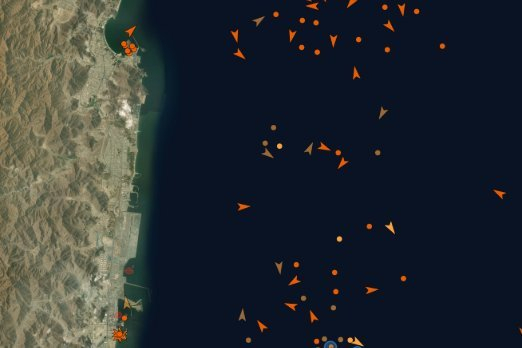
Spotbarge, which determines bunker demand level from AIS tracking of bunker barges and other sources, observed 52 bulk carrier bunker operations in September from 120 a year earlier -- a 57% decline.
Bunker operations for oil and product tankers dropped to 57 from 79, down 28% year on year.
Overall bunker operations in September were down by around 20% from a year earlier.
The decline comes as commercial vessels have faced a series of attacks in the Black Sea, raising concerns over the safety of ships operating in the region.
Several attacks on commercial vessels were reported in the Black Sea during September.
The attacks have continued into October.
Maritime risk firm Ambrey reported on Tuesday that three ships were struck by unmanned aerial vehicles in the Romanian and Bulgarian exclusive economic zones within 24 hours on October 5-6.
“The maritime domain of the conflict has widened, but the targeting profile has not changed,” Ambrey said.
“Deliberate targeting of unrelated shipping remains unlikely, but Romanian and Bulgarian waters should no longer be treated as safe by default.”
Kosman said he was unsure whether vessels were shifting to alternative bunkering locations.
His view was that demand to bring ships into the region had generally declined as the area had become more dangerous.
He also thinks that less dry bulk cargo, including grain, was being shipped or loaded from the region.