Ethanol does not form a stable blend with conventional diesel on its own, requiring a suitable co-solvent to maintain a homogeneous fuel mixture, according to a new study by the Global Centre for Green Fuels (GCGF) and NTU Singapore.
The interim findings, published on November 16, are part of a feasibility study examining the adoption of ethanol as a sustainable marine fuel for ships in Singapore.
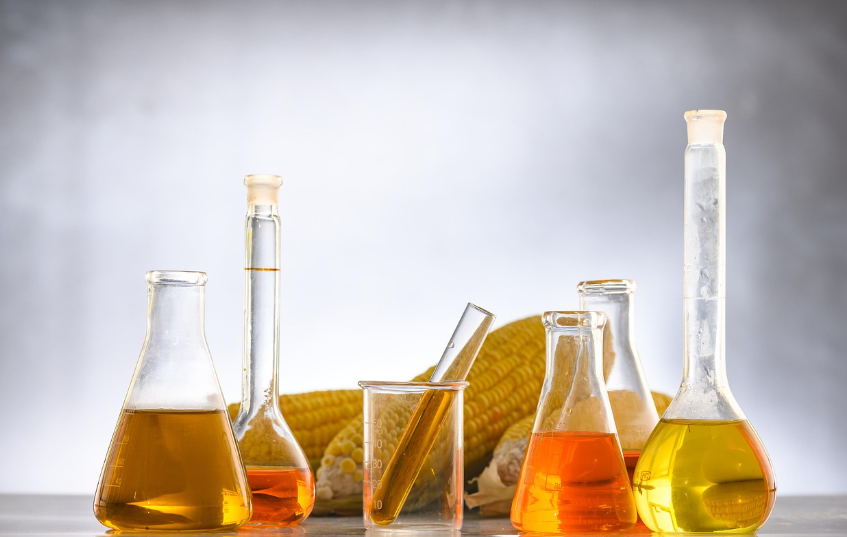
Tests showed that ethanol and diesel could not maintain a stable mixture, separating into two phases within 24 hours, even when ethanol accounted for just 1% of the blend.
Adding palm methyl ester (PME) biodiesel, which is compatible with both ethanol and diesel, enabled the formation of stable ternary blends. A 1:1 ethanol-to-PME ratio maintained a single-phase mixture throughout the tested heating and cooling sequence.
Three formulations – E10B10D80, E20B20D60 and E30B30D40 – were subsequently tested on a four-stroke marine diesel engine of harbour-craft size. All three operated successfully during the pilot trials.
The highest ethanol formulation, E30B30D40, contained 30% ethanol, 30% PME biodiesel and 40% conventional diesel by volume, replacing 60% of diesel by volume.
However, the blends are not yet considered drop-in fuels under current rules, with flash point and fuel-system requirements still being assessed.
The tests also showed that maximum engine power decreased by up to 12.9% with E30, broadly reflecting the blend's lower energy content. Estimated brake thermal efficiency was maintained or slightly improved across all three formulations.
GCGF and NTU MESD plan to conduct further engine testing and durability assessments, with the final comprehensive study report scheduled for publication in 2027.
The report can be downloaded from here.