Iran’s waning influence on geopolitical developments as well as a driver of oil trading was demonstrated again on Thursday, when crude prices moved lower due to rising output offsetting concerns over the Islamic republic’s hostility towards the U.S. and its Persian Gulf neighbours.
As of 0946 GMT, Brent was down 37 cents at $92.39 per barrel and West Texas Intermediate was down 37 cents at $86.16; both contracts were also headed for a weekly fall.
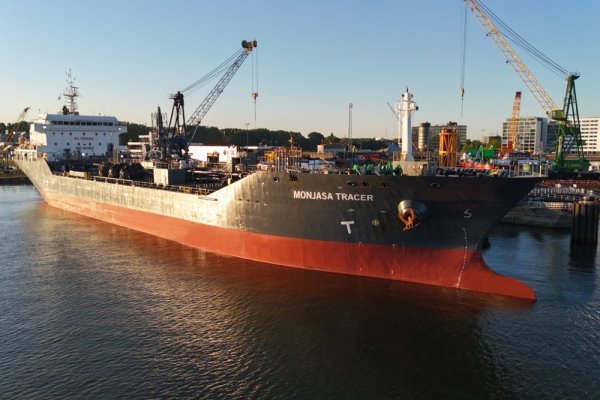
Iran announced on Thursday that two oil supertankers had been disabled by massive explosions from mines after ignoring warnings not to use an “unauthorised route” in the Strait of Hormuz; however, western news outlets could not verify the claim.
This was eclipsed by reports that production from the Organization of the Petroleum Exporting Countries (OPEC) rose in October, spearheaded by aggressive output from Saudi Arabia despite Iran's activities in the Strait.
A modicum of trading confidence was also provided on Thursday by U.S. president Donald Trump, who, following remarks that further military strikes against Iran weren’t needed, wrote on social media that Washington didn’t need a peace deal with the Islamic republic either.
"Those days have long since passed,” he stated. “We've got their money, hundreds of billions of dollars, and we've got their Strait!"
Trump added that he had instructed vice president JD Vance to focus on fraud in the U.S. instead.
Meanwhile, a potential breakthrough of the peace talks between Russia and Ukraine occurred on Thursday when a U.S. envoy said Russian president Vladimir Putin agreed to include European representatives in the next round of negotiations.
However, Ukraine continued attacking Russian energy infrastructure, claiming drones had struck the port area of Ust-Luga by the Baltic Sea and triggered fires.
This prompted Timothy Snyder, chief economist at Matador Economics, to remark, "The tit-for-tat exchanges between Russia and Ukraine and attacks on shipping by [Iran] are beginning to add additional price pressure; it is beginning to look like investors are growing weary from hearing the same song on peace prospects."
For his part, Andrew Lipow, president of Lipow Oil Associates, warned against investor complacency regarding the U.S. and Iran.
“The President may be thinking that given enough time, the economic blockade of Iran will force them to either negotiate with the USA or result in a regime change as the Iranian economy collapses, [but] the Iranians might have different ideas and continue to attack Middle East infrastructure that results in higher prices and forces the president to the negotiating table.
“In any event, it does not seem to me that either side’s negotiating position has changed: Iran wants the blockade to end, sanctions to be lifted and a ceasefire including Lebanon to be declared; the USA wants Iran to get rid of its entire nuclear stockpile and allow free transit through the Strait of Hormuz.”