- IBIA says regulatory restrictions on offshore bunkering continue to hold back Algoa Bay, with some vessel traffic moving to Mauritius
- West African demand remains active, with local production in Nigeria increasingly important and renewed refinery activity in Ghana
- East Africa still faces availability, logistics, and supplier reliability concerns in some markets
- Association is exploring engagement with a Nigerian bunker association and met the Eastern Cape premier at Posidonia
- 2nd Annual Bunker Africa Conference runs September 28-30 in Gqeberha
Algoa Bay continues to represent a significant missed opportunity for South Africa's bunker market, with regulatory restrictions still limiting offshore bunkering activity, according to the International Bunker Industry Association (IBIA).
Some vessel traffic has shifted to alternative locations including Mauritius, which continues to report strong bunker volumes, Tahra Sergeant, IBIA's regional manager for Africa, wrote in a regional update published on the association's website.
The comments came ahead of the 2nd Annual Bunker Africa Conference will take place from September 28-30, 2026 at the Boardwalk Hotel and International Convention Centre in Gqeberha, South Africa, under the theme "An Inclusive Energy Future: Bunkering & Renewables Growth in Gqeberha."
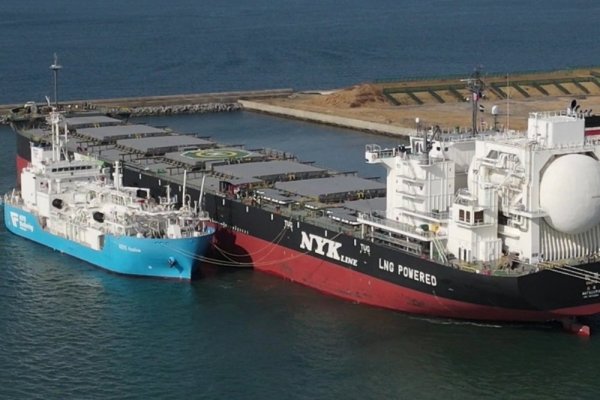
As Ship & Bunker prevously reported, offshore bunkering at the anchorage has been suspended since September 2023, and new ship-to-ship transfer regulations introduced last year drew concern from the local bunker industry for singling out Algoa Bay.
The Southern African market as a whole remains stable but constrained, Sergeant wrote.
Elsewhere on the continent, IBIA describes North Africa as relatively stable, with continued demand for low sulphur marine gasoil around key Mediterranean ports and the Mediterranean Emission Control Area shaping fuel requirements and regional demand patterns.
Demand in West Africa remains active, with local production in Nigeria becoming increasingly important to the wider market, according to the update.
Lagos and Port Harcourt remain the key locations, while renewed refinery activity in Ghana may create further opportunities to strengthen regional fuel availability, Sergeant wrote.
East Africa faces more complex conditions, with availability, logistics, and supplier reliability remaining concerns in some markets, and the association says continued investment and greater regulatory certainty will be central to longer-term development there, with Mozambique and Kenya remaining important supply locations.
At IBIA's Posidonia drinks reception in Athens, chair Adrian Tolson and executive director Alexander Prokopakis met the premier of South Africa's Eastern Cape province, Oscar Mabuyane, to discuss how the association can support regional industry discussions, including on the future of Algoa Bay.
IBIA is also exploring closer ties with national and regional industry bodies, including potential engagement with the Nigerian bunker association, on regulatory alignment, safety standards, and infrastructure, the update said.
In addition to the conference, the association is also planning an Africa-focused webinar on marine fuels and bunkering across the continent, and will support Maritime Week Africa in January 2027.