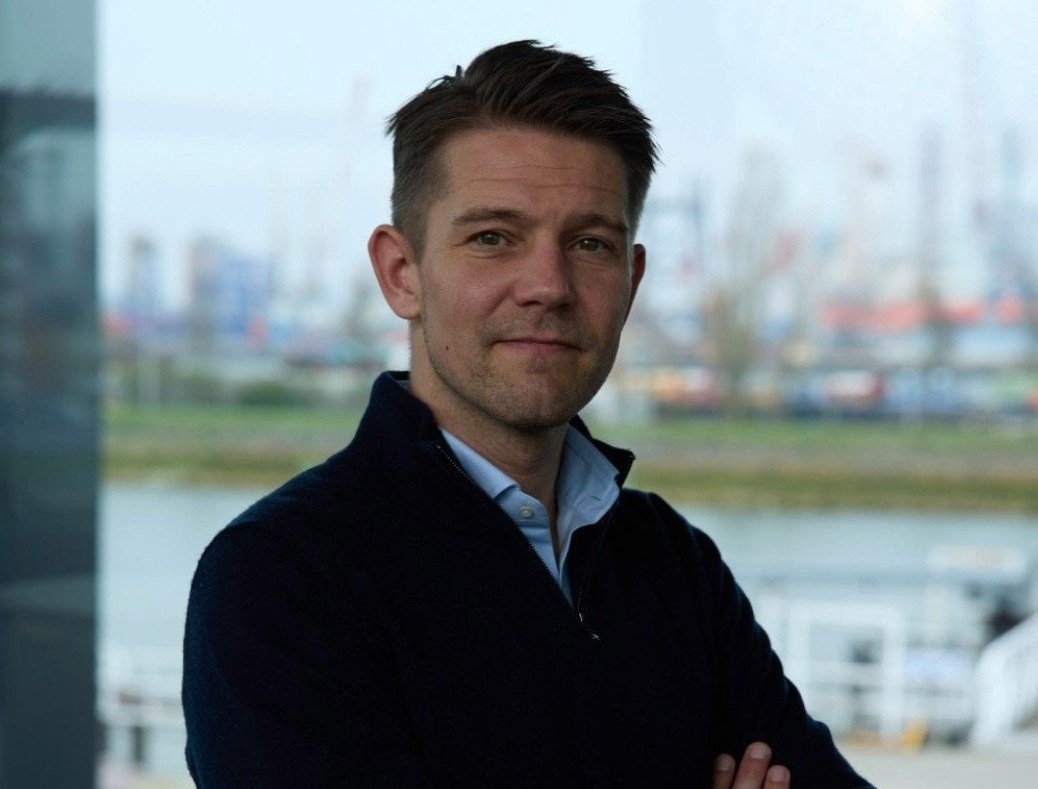
The Netherlands' implementation of the Renewable Energy Directive III (RED III) has pushed conventional bunker demand to neighbouring ports, but Rotterdam's biofuel deliveries are still growing strongly, according to marine fuel supplier Burando Energies.
Biofuel blend deliveries at the port rose by almost 30% year on year in the first half of 2026, to around 345,000 mt from 269,000 mt, even as fossil fuel volumes fell, Nick de Haan, head of decarbonisation strategies at Burando, told Ship & Bunker. With conventional sales down by more than a quarter, biofuels' share of the port's bunker market has nearly doubled.
Speaking ahead of the IBIA Convention 2026 in New York, where he is a speaker, de Haan said the regulatory differences across the ARA region are affecting the conventional and sustainable fuel markets in opposite ways.
“The implementation of RED III in the Netherlands has certainly given fossil fuel suppliers challenges. Volume has moved out of the Netherlands by a rather significant amount, looking at the Port of Rotterdam's statistics and also what we see in the market ourselves,” he said.
However, Rotterdam's biofuel market continued to grow in the first half of 2026, despite the decline in fossil fuel volumes, he said.
Rotterdam Still the Place to Buy Sustainable Fuel
Burando supplied around 30% of Rotterdam's bio-blended and B100 volumes in the first half of the year, and de Haan sees no reason for sustainable fuel suppliers to follow conventional volumes out of the port.
“Local regulations mean Rotterdam, and the Netherlands in general, remains one of the most competitive places for shipowners to purchase sustainable fuels,” he said. “While the difference in regulations across the ARA region has led to fossil fuel demand shifting to ports outside the Netherlands, sustainable fuels are, on the contrary, well supported by the economic incentives in place.”
Nor does he expect the Dutch government to reverse course.
“Our view is that the Netherlands is not expected to reverse its decision to include their RED III Mandate for maritime fuel sales,” he said. “The more likely relief is Belgium catching up: the price differential is expected to persist at least until Belgium and Germany implement RED III.”
A $150/mt Green Premium
The economics already favour biofuels more than many shipowners assume, de Haan said. With EU Emissions Trading System (EU ETS), FuelEU Maritime pooling costs included and for the Netherlands the RED III surcharge, VLSFO in the ARA region currently costs just over $1,100/mt. B100 biodiesel, once the RED III discount is applied, comes to about $1,250/mt.
“Effectively a $150/mt green premium,” he said.
Against marine gasoil, the picture reverses.
“Like for like, comparing B100 biodiesel to regular marine gasoil and factoring in the same EU ETS and FuelEU Maritime pooling costs and the RED III discount on the biodiesel, you're looking at a discount for B100 of around $685/mt,” he said.
Beyond Regular (FAME or Biodiesel)
Regulation, economics and a maturing market are also pulling the sector away beyond its traditional use of fatty acid methyl ester (FAME) with the EN14214 specification, de Haan said.
“We see increased demand in our region for non-standardised sustainable products such as FAME end-distillation residues, more often than not with higher GHG savings compared to regular FAME and more competitive from a price perspective,” he said.
Burando has supplied these lower-GHG-intensity products as B30 and B100 to several shipowners. Its B100 made from FAME end-distillation residues, containing no cashew nut shell liquid (CNSL), is fully compliant with ISO 8217:2024 Table 2, alongside the automotive-grade EN 14214 B100 biodiesel the company also supplies. On price alone the products save around $150-200/mt, before any value is put on their higher GHG savings.
Getting such non standardized fuels approved for use remains the sticking point.
“From what we've experienced in the actual market, requesting extensive engine tests, OEM and/or class approval is hard, but not impossible,” he said.
Asked whether the marine biofuel market was approaching a ceiling, on feedstock availability, price or anything else, de Haan was unequivocal.
“We believe that we are far from it, especially given the broadening array of options for decarbonisation available now and in the future and with increasing demand more options and technologies will become available when they make economic sense,” he said.
IMO Framework a Signal, Not a Driver
The IMO's Net-Zero Framework (NZF), and the gentler early greenhouse gas intensity trajectory that found wide support at the recent ISWG-GHG 22 session, matter less to ARA than the European rules already in force, de Haan said.
“Our take is that the effect on biofuel demand in ARA over the next few years is small, simply because ARA biofuel demand today is driven by FuelEU, the EU ETS and Dutch RED III, not the IMO,” he said. “The NZF would not start until 2028 in any case, and the implementation guidelines were carried forward to ISWG-GHG 23 in November.”
“The softer curve matters more for the investment signal. It lowers the compliance pull on blends in 2029-30, but it could make adoption likelier, which is worth more than a tougher curve that never takes effect.”
The debate over whether zero- and near-zero-emission fuels should be rewarded with cash from a fund or with a multiplier is, in his view, a question of predictability.
“A cash reward from a fund is a predictable per-tonne subsidy that narrows the gap for qualifying fuels. A multiplier is worth more when surplus units are expensive and less when they are cheap, so it carries price risk,” he said.
Whether FAME blends qualify at all will depend on the final emissions threshold.
“If the threshold is strict, the reward would mostly bypass today's B30 and favour B100 from lower-carbon intensity feedstocks,” he said. “That would push suppliers towards advanced and waste feedstocks, a shift Dutch RED III is already forcing.”
Built to Switch
Burando has invested in a biofuel terminal in Amsterdam, its own barge fleet and a barge in Zeebrugge for biofuels and methanol, and de Haan said the set-up is designed to cope with a regulatory signal that may arrive late or not at all.
“The current shoreside and floating infrastructure we have in place allows us to easily shift and adapt our product mix in terms of quality and sustainability characteristics,” he said. “Our whole logistical set-up allows us to switch the mix of products we offer, or pursue alternative business cases to employ our assets.”
Methanol is the exception.
“Alternative fuels such as methanol require heavier and more specific investments on the logistics side,” he said.
“We are currently making, and will continue to make, investments in alternative fuel logistics.”
What the US Needs
With the convention in New York and Burando building a US presence, de Haan is candid about the gap between the two markets.
“As far as we can see, demand for sustainable fuels for maritime purposes in the Americas is far smaller than that in the EU,” he said.
Closing it, he believes, will take policy.
“As with many things, people and companies have to be incentivised to go in certain directions. A mandate imposing the use of sustainable fuels similar to RED III would definitely improve demand,” he said. “Similarly, making the marine sector eligible for RINs, creating an economic incentive, would also drive sustainable fuel demand in the US.”
Nick de Haan will be speaking at the IBIA Convention 2026 in New York.