- AiP presented at Gastech 2026 in Bangkok on Tuesday
- Babcock LGE claims up to 33% better reliquefaction efficiency and around 25% lower reliquefaction energy use
- Loading and cooldown times cut by 14%, the firm says
- System connects boil-off gas cooling with fuel gas heating, with no additional rotating machinery
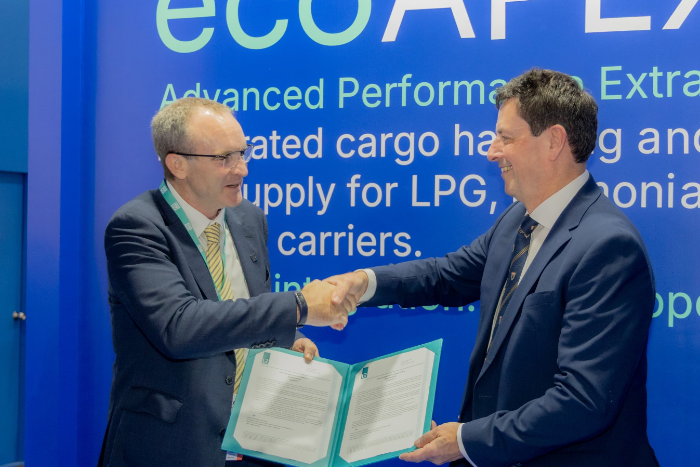
Lloyd's Register (LR) has granted approval in principle to Babcock LGE's ecoAPEX cargo handling technology for liquefied gas carriers, a week after the UK marine engineering firm launched the system.
The approval was presented on Tuesday at Gastech 2026 in Bangkok, LR said in an emailed press release.
Rather than adding rotating machinery, ecoAPEX links two onboard processes that normally run independently: cooling boil-off gas through reliquefaction, and heating fuel gas for the engines.
Babcock LGE says the system can improve reliquefaction efficiency by up to 33%, cut reliquefaction energy consumption by around 25%, and reduce loading and cooldown times by 14%, lowering operating costs and emissions.
The patent-pending concept has potential applications across LPG, ammonia, and ethane carriers, according to the company.
"On dual-fuel gas carriers, ecoAPEX enables two processes that traditionally operate separately to integrate effectively, reducing cargo handling energy demand without adding equipment, complexity, or operational burden," said Babcock LGE managing director Neale Campbell.
"Achieving AiP validates the Babcock LGE ecoAPEX technology concept and provides assurance to shipowners for commercial adoption."
LR chief growth officer Andy McKeran said the industry increasingly recognises that significant efficiency gains can come from improving onboard systems, and not only from fuel and propulsion developments.
"We are excited and privileged to continue our long-term collaboration with Babcock LGE as they pioneer new approaches to improving gas carrier performance, reducing costs and supporting lower emissions across the sector," he said.