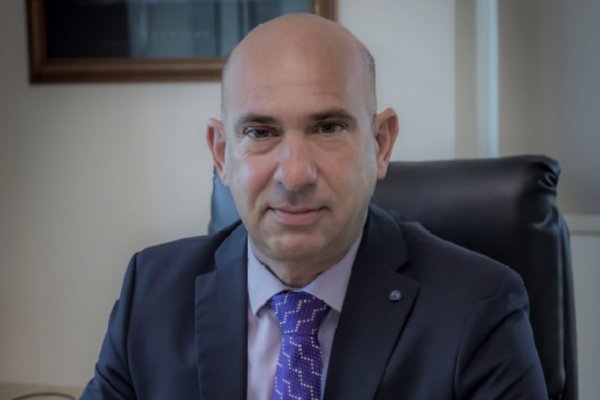
- Dominguez calls for strong national systems and international information sharing
- 587 vessels currently listed as "false flag" in IMO's GISIS database
- Almost 40 Member States have reported fraudulent use of their flags
- Statement follows African maritime administrations' meeting in Kampala
IMO Secretary-General Arsenio Dominguez has called for strong national systems and international information sharing to tackle fraudulent ship registries and fraudulent registration practices.
On Wednesday Dominguez said in a statement that coordinated action was needed to protect seafarers, safeguard the marine environment, and preserve confidence in international trade.
As Ship & Bunker detailed in September, fake flags are a growing problem for bunker suppliers, who can no longer trust a vessel's certificate of registry as a sanctions check and now risk being designated themselves for supplying a listed ship.
The statement follows his bilateral meetings with transport ministers from several African countries at the 9th Conference and Annual General Assembly of the Association of African Maritime Administrations (AAMA) in Kampala, Uganda, on November 17-19, where he says he heard from those who have recently experienced fraudulent activity.
Several African countries are among those that have reported attempts by fraudulent operators to misuse their national identities, establish fake registries, or issue forged certificates, according to the IMO, which keeps a list of reported cases.
The IMO Legal Committee noted at its 113th session in April that 529 vessels had been identified as falsely flying the flag of a country, while almost 40 Member States had reported their flags being used without their knowledge or consent.
The organisation's Global Integrated Shipping Information System (GISIS) ship database, which is updated when information is received that a ship is a false flag, currently lists 587 such vessels, the IMO says.
Identifying such malpractice has also become more difficult, with the criminal networks behind it said to have become increasingly sophisticated by creating convincing websites, issuing forged registration certificates, submitting falsified documentation, and posing as legitimate representatives of maritime administrations.
In some cases, IMO says, countries that do not even operate international ship registries have discovered vessels claiming their nationality.
Vigilance Needed
"The vast majority of those who operate in the maritime sector do so responsibly," Dominguez said.
"They deserve a system that rewards compliance, transparency, and accountability. Fraudulent registries undermine all three.
"We now have greater awareness of the problem, stronger international guidance and a growing commitment from Member States to act. What we need next is determined and coordinated implementation. There is no place for fraud in the global maritime community," he said.
The guidance he referred to is the IMO's Guidelines on the registration of ships, approved by the Legal Committee in April, which set out practical measures for flag state registries on verification, due diligence, ownership records, and oversight of registration procedures.
"Vigilance from all stakeholders is needed. Governments, shipowners, port authorities, classification societies, insurers, financial institutions, and seafarer organizations all have a part to play in identifying suspicious activities and protecting the integrity of the global maritime system."