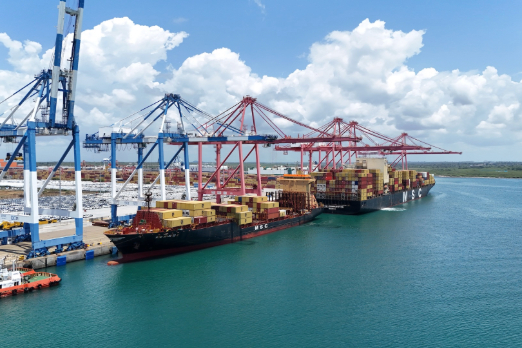
Vitol reporting that around 12 million barrels per day (bpd) of crude and 2 million bpd of refined products left the Middle East on tankers in the last seven to 10 days fortified the perception that transit amid the U.S./Iran war was not as curtailed as the Islamic republic and media claimed it to be – and as a result, oil prices on Tuesday remained steady.
As of 1633 GMT, Brent was down 29 cents at $100.03 per barrel, and West Texas Intermediate rose 16 cents to $89.59.
John Evans, analyst at PVM, said, "The price of the global crude benchmark, Brent, is once again toiling around $100/barrel, as its reasons for trading much beyond the psychological 3-digit mark are being eroded ... for now the assumption of more crude getting through has dampened price fervour."
Adding to overall trading confidence was Saudi Arabia, whose energy minister prince Abdulaziz bin Salman said that oil pumped through the East-West pipeline to the kingdom’s Red Sea export hub of Yanbu had reached 5.8 million barrels as of Tuesday morning.
Meanwhile, the International Energy Agency will meet next week to work out the details of a diesel stock release, on the heels of the Group of Seven major economies agreeing on Friday to release 100 million barrels of diesel and crude oil from emergency reserves and pledging not to impose export restrictions.
Still, the impact of the U.S./Iran war remained very much at the forefront of analytical concern: on Tuesday the Energy Information Administration raised its oil price forecast for this year and 2027 due to a rapid fall in global stockpiles.
Acknowledging the risk of further disruptions to physical oil flows, the EIA in its Short-Term Energy Outlook forecast Brent to average about $105 per barrel in the fourth quarter, $14 above the Administration’s previous estimate.
Overall, for 2026, Brent prices are now expected to average about $98 per barrel, up 8 percent from the EIA's prior forecast last month.
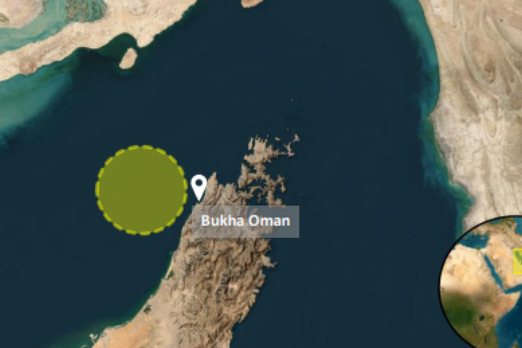
In other war-related oil news on Tuesday, some of the biggest Gulf oil-producing companies called for external investments into new routes to bypass the Strait of Hormuz.
Amir Nassar, CEO of Saudi Aramco, told delegates at the 2026 Energy Intelligence Forum in London, “While the Kingdom is capable and confident, and its systems are coping, no country should face this alone…oil and gas infrastructure is not a cost to be minimized or avoided; it is a collective necessity for producers and consumers alike.”
Reportedly, Kuwait is in discussions with European partners to have more refined petroleum products stored closer to consumers in Europe.