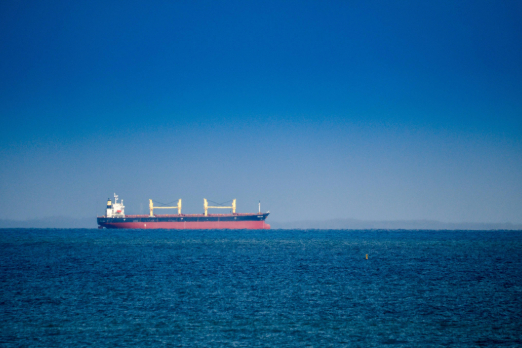
Only around 10 tankers are estimated to have transited the Strait of Hormuz in the past week, according to Clarksons Research.
Those vessels carried about 12 million bbls, compared with a typical 250 tankers moving roughly 300 million bbls in a normal week, Steve Gordon, Global Head of Clarksons Research, said in an email update on Monday.
Gordon noted that around 75% of transits in the past week have been outbound, pointing to a market where vessels are primarily leaving the Gulf rather than entering it.
The imbalance suggests limited fresh cargo inflows and a continued drawdown of ships already positioned within the region.
Overall, transits across vessel types remain about 95% below pre-conflict levels, with activity reduced to just a handful of ships per day.
The disruption is also feeding into higher transport costs.
Clarksons estimates the cost of moving crude on a US Gulf-Asia route has risen to about $10/bbl, up from roughly $5/bbl at the start of the year, as longer routes and tighter vessel supply reshape trade flows.
Gas shipping is similarly constrained, with only a ‘trickle’ of very large LPG carriers continuing to pass through the strait, running at around 80% below normal levels.
At the same time, bunker prices have surged to a multi-month high at key ports.
This has led operators to adjust vessel speed for efficiency.
Clarkson's data suggests average container vessel speeds have eased by about 2% in March as operators adjust to higher fuel costs.